

If you’ve been searching for a realistic way to build a family fitness routine that actually fits into your busy schedule, you’re in the right place. Between school runs, work deadlines, and endless to-do lists, staying active as a family can feel overwhelming. Many parents want healthier habits at home but struggle to find routines that are simple, sustainable, and enjoyable for everyone.
This article is designed to help you change that. We’ll walk through practical, age-appropriate strategies to make movement a natural part of your daily life—without expensive equipment, rigid schedules, or added stress. From quick morning stretches to fun weekend activities, you’ll discover ways to keep the whole family engaged and motivated.
Our guidance is grounded in established wellness principles and informed by widely recommended pediatric and family health practices, so you can feel confident you’re building habits that support long-term physical and emotional well-being.
Move together, grow together starts with a simple truth: one plan can fit every age when it’s flexible. A smart family fitness routine blends short, skill-based activities with scalable intensity, so a preschooler hops, a teen adds resistance, and adults focus on strength and mobility. Think 20-minute circuits that include:
- Animal walks for coordination and core strength
- Bodyweight squats with optional dumbbells
- Timed dance bursts to boost heart health
Each movement has a clear benefit: stronger muscles, better balance, improved endurance. The structure keeps boredom low and results visible, turning “exercise” into shared, energizing momentum for lasting family connection daily.
The Playful Start: Movement for Toddlers and Preschoolers (Ages 2-5)
Movement at this age should look like play, not exercise. Exercise implies structured, repetitive workouts. Play, on the other hand, means joyful, imaginative movement that builds motor skills—coordination, balance, and strength—without pressure. In other words, we are shaping positive associations with being active (think less boot camp, more Bluey episode).
First, try Animal Walks. Bear crawls, frog jumps, and crab walks strengthen little muscles while improving coordination. Because children mimic what they see, demonstrate each move dramatically.
Next, Balloon Volleyball offers hand-eye coordination practice with almost zero injury risk. A balloon floats slowly, giving toddlers time to react and succeed.
Then, play Dance Party Freeze. Start music, let them wiggle, and shout “freeze!” to build listening skills and body control.
Finally, keep sessions short—10 to 15 minutes—and attach them to a daily family fitness routine, like a pre-nap dance burst.
Building Foundations: Fun Fitness for School-Aged Kids (Ages 6-12)
At this age, kids are ready for a little structure—but don’t tell them that. The goal is to build cardiovascular health (how well the heart and lungs deliver oxygen), strength, and flexibility while it still feels like play. Think less boot camp, more “American Ninja Warrior” in the backyard.
First, create a Backyard Obstacle Course. Use pillows for balance beams, boxes for tunnels, and pool noodles for hurdles. Not only does this boost coordination (the ability to control body movement), it also burns serious energy. Time each run and let them try to beat their “personal best” (cue the Rocky theme).
Next, plan Family Bike Rides. Explore local parks or trails, review hand signals, and insist on properly fitted helmets. Safety rules aren’t buzzkills—they’re superpowers.
Then, try a Skill of the Week. One week it’s jump rope, the next dribbling a basketball, then hula hooping. Breaking skills into small steps builds confidence and resilience.
Finally, schedule it on the calendar as Family Active Time. When it’s predictable, it becomes a family fitness routine kids actually look forward to. Consistency turns movement into lifelong healthy habits for growing bodies and strong minds.
Engaging the Hard-to-Please: Workouts for Teenagers (Ages 13–18)
Teenagers crave autonomy—the psychological need to feel in control of their own choices (American Psychological Association). So when workouts feel forced, motivation tanks. The trick? Compare control vs. command.
A: “You’re working out because I said so.”
B: “You pick the challenge—we’ll train for it together.”
Option B wins. Always.
1. The Shared Goal
Train for a local 5K, obstacle race, or tough hike. Let them choose the event. A shared target builds intrinsic motivation (doing something because it feels rewarding, not required). Plus, crossing a finish line together beats another lecture about screen time.
2. Tech-Fueled Fitness
Old-school jogging vs. gamified movement? Teens pick tech. Apps like Zombies, Run! turn cardio into a survival storyline (yes, like you’re in The Last of Us). YouTube creators they actually like > a DVD from 2009.
3. Empowerment Through Choice
Assign them one weekly workout to plan. Strength circuit? Dance session? Basketball drills? Giving ownership increases follow-through (Self-Determination Theory, Deci & Ryan).
Mom Life Hack: Connect effort to desire. Conquer a tough trail → earn that camping weekend.
And don’t forget recovery. Sleep fuels growth and performance—see the importance of sleep rituals for all ages.
A structured class builds discipline. A collaborative family fitness routine builds connection. Choose wisely.
Staying Strong: A Guide for Parents and Grandparents
Staying active alongside your kids or grandkids isn’t about chasing six-pack abs (leave that to the Marvel actors). It’s about functional fitness—training your body for real-life movement like lifting toddlers, carrying groceries, or getting up off the floor without wincing. Functional fitness simply means exercises that mirror everyday tasks. In my opinion, this matters far more than flashy gym routines.
Some argue adults should “just rest” while kids play. I disagree. Being an Active Supervisor keeps you engaged and strong. While they tackle an obstacle course, try bodyweight squats, lunges, or a plank hold nearby. Modify depth or duration to suit your level.
Build The Foundation with core work like bird-dog (a balance move on hands and knees extending opposite arm and leg), glute bridges, and modified push-ups. These protect your back and improve joint stability (Harvard Health notes core strength supports injury prevention).
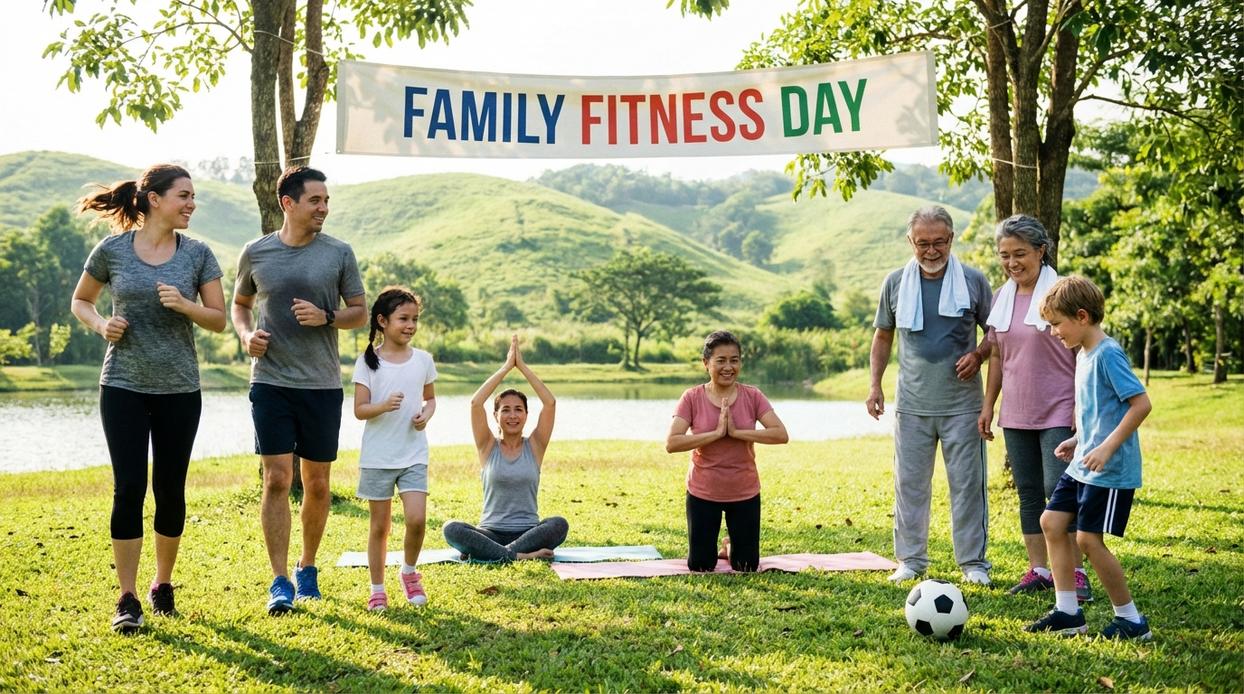
Don’t skip Flexibility and Balance. A short family stretch, simple yoga poses, or tai chi movements enhance mobility and reduce fall risk (CDC links balance training to fewer falls). Why not make it your family fitness routine?
Practical tip: Pack resistance bands—they’re lightweight, low-impact, and instantly turn park time into strength training.
Your First Step to a Healthier, Happier Family
You don’t need a Pinterest-perfect plan or a color-coded calendar to reset your household’s energy. What you need is momentum. The real win isn’t just movement — it’s connection.
The screen-time struggle is real (yes, even for adults). But here’s what most guides miss: kids don’t resist exercise — they resist boredom. That’s why this approach centers on play-based movement, shared challenges, and flexibility for every age.
Unlike generic fitness advice, this plan adapts to:
- Toddlers who need imagination-driven games
- Teens who crave autonomy
- Grandparents who benefit from low-impact mobility work
That’s your built-in advantage. A family fitness routine works best when everyone feels included, not instructed.
Some argue structured workouts build discipline. True. But consistency beats intensity every time (the CDC confirms regular moderate activity improves long-term health outcomes).
Start small. Schedule one 10-minute Animal Walk session or a weekend bike ride. Pro tip: put it on the calendar like an appointment. Small wins stack fast — and so do the memories.
Incorporating family fitness into your daily life not only strengthens bonds but also enhances the nurturing environment that can be further enriched by practices like those discussed in our article on Scoopnurturement.
Make Your Family’s Health a Daily Priority
You started looking for ways to create a healthier, more connected home — and now you have practical, realistic strategies to make that happen. From simple movement ideas to consistent habits, you’re equipped to build a family fitness routine that actually fits into real life.
The truth is, busy schedules, screen time, and constant exhaustion can make it feel impossible to stay active together. That frustration adds up. But small, intentional steps done daily can completely shift your family’s energy, mood, and long-term health.
Now it’s time to take action. Choose one activity and schedule it this week. Put it on the calendar. Protect it. Then build from there.
Thousands of families are already transforming their routines with simple, sustainable wellness habits — and you can too. Don’t let another week pass feeling stuck or overwhelmed. Start your family fitness routine today and create the healthy, happy home your family deserves.
 Founder & CEO
Gavren Thorvale has opinions about borode motherhood journeys. Informed ones, backed by real experience — but opinions nonetheless, and they doesn't try to disguise them as neutral observation. They thinks a lot of what gets written about Borode Motherhood Journeys, Curious Insights, Family Wellness Routines is either too cautious to be useful or too confident to be credible, and they's work tends to sit deliberately in the space between those two failure modes.
Reading Gavren's pieces, you get the sense of someone who has thought about this stuff seriously and arrived at actual conclusions — not just collected a range of perspectives and declined to pick one. That can be uncomfortable when they lands on something you disagree with. It's also why the writing is worth engaging with. Gavren isn't interested in telling people what they want to hear. They is interested in telling them what they actually thinks, with enough reasoning behind it that you can push back if you want to. That kind of intellectual honesty is rarer than it should be.
What Gavren is best at is the moment when a familiar topic reveals something unexpected — when the conventional wisdom turns out to be slightly off, or when a small shift in framing changes everything. They finds those moments consistently, which is why they's work tends to generate real discussion rather than just passive agreement.
Founder & CEO
Gavren Thorvale has opinions about borode motherhood journeys. Informed ones, backed by real experience — but opinions nonetheless, and they doesn't try to disguise them as neutral observation. They thinks a lot of what gets written about Borode Motherhood Journeys, Curious Insights, Family Wellness Routines is either too cautious to be useful or too confident to be credible, and they's work tends to sit deliberately in the space between those two failure modes.
Reading Gavren's pieces, you get the sense of someone who has thought about this stuff seriously and arrived at actual conclusions — not just collected a range of perspectives and declined to pick one. That can be uncomfortable when they lands on something you disagree with. It's also why the writing is worth engaging with. Gavren isn't interested in telling people what they want to hear. They is interested in telling them what they actually thinks, with enough reasoning behind it that you can push back if you want to. That kind of intellectual honesty is rarer than it should be.
What Gavren is best at is the moment when a familiar topic reveals something unexpected — when the conventional wisdom turns out to be slightly off, or when a small shift in framing changes everything. They finds those moments consistently, which is why they's work tends to generate real discussion rather than just passive agreement.