

If you’re searching for simple, meaningful ways to feel more connected at home, you’re likely looking for practical family mindfulness activities that actually fit into real life. Between school runs, work deadlines, and endless to-do lists, finding calm moments together can feel unrealistic—but it doesn’t have to be.
This article is designed to help you bring mindfulness into your daily routine in ways that are approachable, age-appropriate, and easy to maintain. We’ll explore activities that strengthen emotional bonds, reduce stress, and encourage open communication—without requiring hours of preparation or special tools.
Our guidance is rooted in child development research, family wellness best practices, and insights from mental health professionals who specialize in stress reduction and emotional resilience. Whether you have toddlers, teens, or a mix of both, you’ll find actionable ideas to help your family slow down, reconnect, and build lasting habits of presence together.
Finding Calm Together: A Practical Guide to Family Presence
Modern family life feels like a nonstop group chat—loud, fast, and impossible to mute. Back in 2020, many of us noticed how stress piled up at home. Since then, we’ve tested resets that take under ten minutes.
However, you might argue there’s no time. Yet connection doesn’t require a weekend retreat. Instead, try:
- Two-minute breathing before homework
- A tech-free dinner check-in
- Gratitude circles on Sundays
These family mindfulness activities build emotional regulation—the skill of noticing feelings without being ruled by them. Over three months, families report mornings and fewer meltdowns.
Why Bother? The Real-World Benefits of a Mindful Family
Family mindfulness simply means paying attention, on purpose, to the present moment without judgment—together. It’s not an hour of silent meditation (let’s be realistic). It’s noticing feelings, tone, and reactions as they happen.
Benefit for Kids: Research shows mindfulness improves emotional regulation and attention in children. A 2019 meta-analysis in Developmental Psychology found consistent improvements in focus and reduced anxiety symptoms among school-aged kids. When children learn to pause before reacting, big feelings like anger or frustration become manageable instead of overwhelming.
Benefit for Parents: Studies from the American Psychological Association link mindfulness practices to lower stress and reduced parental burnout. Parents report responding more calmly rather than reacting impulsively (fewer “because I said so” moments).
Benefit for the Family Unit: Shared family mindfulness activities strengthen empathy and communication. According to Harvard’s Center on the Developing Child, responsive interactions build stronger long-term emotional bonds.
- Better focus
- Calmer conflict resolution
- Deeper connection
Small pauses today create resilient families tomorrow.
Playful Presence: Mindfulness Games for Young Children (Ages 3–7)
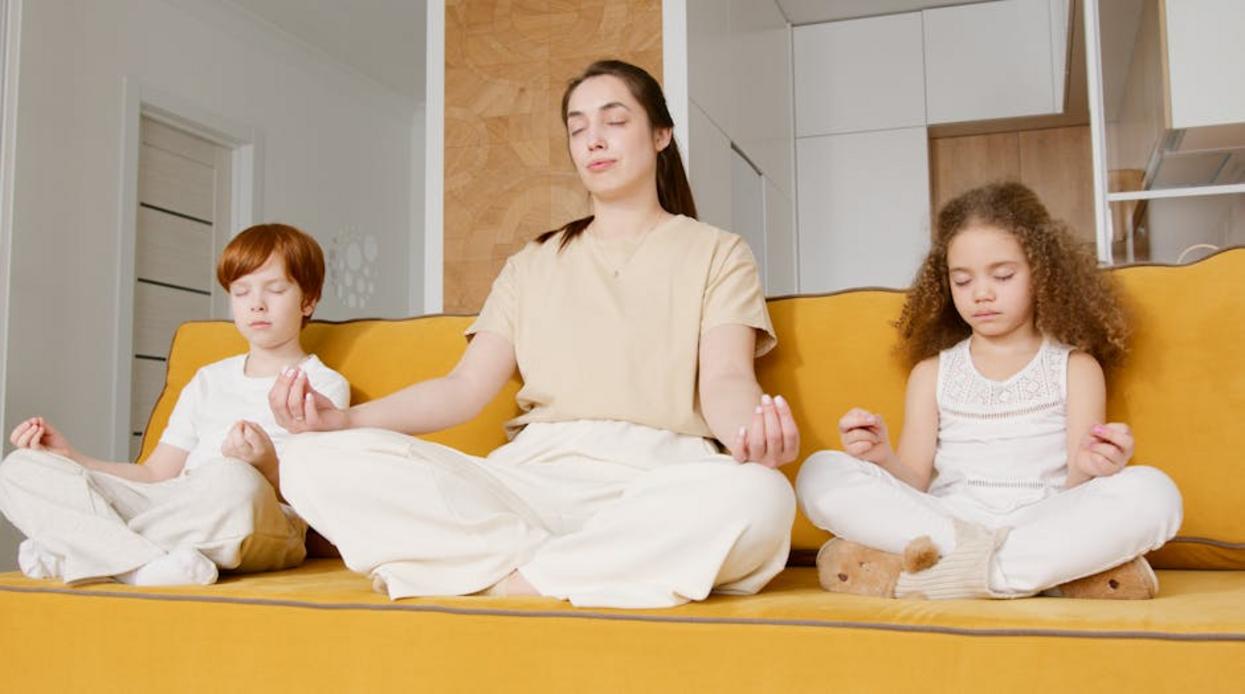
Mindfulness simply means paying attention on purpose, in the present moment. For young children, that doesn’t look like silent meditation on a mountaintop (let’s be realistic). It looks like play. And the benefit? Better focus, calmer emotions, and stronger self-awareness—skills linked to improved behavior and academic readiness (American Academy of Pediatrics).
Belly Buddies Breathing
Have your child lie down and place a favorite stuffed animal on their belly. As they breathe in deeply through their nose, the toy rises. As they breathe out slowly, it falls. This is called diaphragmatic breathing—using the large muscle under the lungs to take fuller breaths.
What’s in it for them? Slower breathing signals the nervous system to relax, reducing stress hormones like cortisol (Harvard Health). Pro tip: Count to three on the inhale and four on the exhale to naturally lengthen calming breaths.
The Listening Walk
Take a slow walk indoors or outside. The goal is to notice as many sounds as possible—the hum of the fridge, birds chirping, footsteps on pavement. This builds sensory awareness, the ability to tune into what’s happening right now. Kids who practice this often improve concentration (think less “squirrel!” moments).
Mindful Snacking
Offer one raisin, apple slice, or cracker. Explore it with all five senses before eating. This strengthens focus and helps prevent mindless eating habits later in life. (Yes, even preschoolers can be tiny speed-eaters.)
Feelings as Weather
Ask, “What’s your inner weather today?” Sunny? Cloudy? Stormy? This builds emotional literacy—the ability to name feelings, which research shows helps regulate them (Yale Center for Emotional Intelligence).
These simple family mindfulness activities can easily fit into your routine. For a broader approach, explore creating a weekly family wellness plan that covers mind and body.
Connecting with Older Kids & Teens: Activities They Won’t Roll Their Eyes At
Let’s be honest: teens have a radar for anything that feels forced. Suggest “bonding time,” and you might get a dramatic sigh worthy of an Oscar. But research shows that consistent, low-pressure family rituals significantly improve adolescent emotional regulation and communication (Journal of Adolescent Health, 2018). The key? Subtlety.
Here are family mindfulness activities that actually work:
-
Mindful Music Listening
Play an instrumental track, close your eyes, and afterward share the colors, memories, or feelings that surfaced. Neuroscience research shows music activates the brain’s emotional centers, strengthening empathy and self-awareness (Harvard Health, 2020). No critiques allowed—this isn’t American Idol. -
The Gratitude Jar Ritual
Keep a jar in a shared space. Once a week, read the notes aloud. Studies from UC Berkeley’s Greater Good Science Center link gratitude practices to increased optimism and stronger family bonds. Even skeptical teens tend to soften when they hear appreciation directed at them (quietly powerful stuff). -
Sensory Grounding (The 5-4-3-2-1 Method)
This anxiety-reduction tool asks teens to identify five things they see, four they feel, three they hear, two they smell, and one they taste. Therapists widely recommend it because grounding techniques reduce acute stress by anchoring attention to the present moment. -
Tech-Free Mindful Meals
One device-free meal weekly improves conversational depth and emotional connection, according to a 2014 study in Pediatrics. Pro tip: start with takeout night to ease resistance.
Some argue teens need space, not structured connection. True—but research consistently shows small, predictable rituals build trust without pressure. And trust? That’s the real win.
Last winter, our mornings felt like a RUSHED tornado—shoes missing, tempers flaring, everyone late. So we tried three small resets that changed everything.
-
The “One Mindful Breath” Transition. Before school or homework, we pause and take one slow breath together. It sounds almost too simple (I thought it was silly at first), but that single inhale creates a clear line between chaos and calm. Think of it as a mental reset button.
-
Create a “Peace Corner.” Ours has pillows, a soft blanket, and a few sensory toys. A Peace Corner is a tiny, designated space for self-regulation—meaning calming your body and emotions without punishment. Even adults use it. YES, really.
-
Mindful Bedtime Routine. We do a short body scan—quietly noticing each body part—and share a “rose and thorn.” One good thing. One challenge. Honest, simple connection.
These small family mindfulness activities don’t erase hard days—but they soften them.
Making Mindfulness a Lasting Family Value
You now have a toolkit of simple, effective ways to create calm and connection at home. Busy schedules are real; I do not pretend five minutes fixes everything. Still, consistency beats intensity. Even short family mindfulness activities, repeated daily, can shift the mood of a household.
Why does this work? Shared rituals build a language for emotions and strengthen neural pathways through repetition (brains love patterns).
- Choose one practice to try this week.
- Notice what changes.
- Adjust without guilt.
I cannot promise perfection, but small moments add up over time.
Create Calmer, Happier Moments at Home
You came here looking for realistic ways to bring more peace, connection, and balance into your busy mom life. Now you have simple, practical strategies you can actually use — from daily rhythms to meaningful family mindfulness activities that fit into real schedules.
The overwhelm, the constant multitasking, the feeling of never quite catching up — that’s the weight so many moms carry. Small, intentional shifts can ease that pressure and help you feel more present, patient, and connected at home.
The key now is action. Choose one routine to try this week. Start one of the family mindfulness activities at dinner or bedtime. Keep it simple. Consistency matters more than perfection.
If you’re ready for calmer days, smoother routines, and parenting support that truly understands your challenges, join thousands of moms who rely on our daily tips and life hacks to make family life easier. Start today and feel the difference in your home this week.
 Community Engagement Manager
Sparklevana Jones is the kind of writer who genuinely cannot publish something without checking it twice. Maybe three times. They came to borode motherhood journeys through years of hands-on work rather than theory, which means the things they writes about — Borode Motherhood Journeys, among other areas — are things they has actually tested, questioned, and revised opinions on more than once.
That shows in the work. Sparklevana's pieces tend to go a level deeper than most. Not in a way that becomes unreadable, but in a way that makes you realize you'd been missing something important. They has a habit of finding the detail that everybody else glosses over and making it the center of the story — which sounds simple, but takes a rare combination of curiosity and patience to pull off consistently. The writing never feels rushed. It feels like someone who sat with the subject long enough to actually understand it.
Outside of specific topics, what Sparklevana cares about most is whether the reader walks away with something useful. Not impressed. Not entertained. Useful. That's a harder bar to clear than it sounds, and they clears it more often than not — which is why readers tend to remember Sparklevana's articles long after they've forgotten the headline.
Community Engagement Manager
Sparklevana Jones is the kind of writer who genuinely cannot publish something without checking it twice. Maybe three times. They came to borode motherhood journeys through years of hands-on work rather than theory, which means the things they writes about — Borode Motherhood Journeys, among other areas — are things they has actually tested, questioned, and revised opinions on more than once.
That shows in the work. Sparklevana's pieces tend to go a level deeper than most. Not in a way that becomes unreadable, but in a way that makes you realize you'd been missing something important. They has a habit of finding the detail that everybody else glosses over and making it the center of the story — which sounds simple, but takes a rare combination of curiosity and patience to pull off consistently. The writing never feels rushed. It feels like someone who sat with the subject long enough to actually understand it.
Outside of specific topics, what Sparklevana cares about most is whether the reader walks away with something useful. Not impressed. Not entertained. Useful. That's a harder bar to clear than it sounds, and they clears it more often than not — which is why readers tend to remember Sparklevana's articles long after they've forgotten the headline.