
If you’re searching for realistic ways to encourage independent play for kids, you’re likely feeling the constant pull of being “on” all day—answering questions, solving disputes, and filling every quiet moment with activity. You want your child to play confidently on their own, but you also want to make sure you’re supporting their development the right way.
This article is designed to help you do exactly that. We’ll break down why independent play matters for emotional growth, creativity, and problem-solving—and how to nurture it without guilt, pressure, or unrealistic expectations. You’ll find practical, age-appropriate strategies that fit into real family routines, not picture-perfect schedules.
Our guidance is grounded in child development research and informed by evidence-based parenting principles, so you can feel confident that the tips shared here are both practical and developmentally sound. By the end, you’ll have simple, actionable steps to help your child build confidence—and to reclaim a little breathing room for yourself.
Every parent knows the chorus: “I’m bored.” It feels easier to hand over a screen or schedule another activity. But constant entertainment trains kids to wait for direction instead of creating their own fun. When you step back, something powerful happens.
Encouraging independent play for kids builds confidence, problem-solving skills, and resilience. They learn to turn couch cushions into castles (yes, the mess is part of the magic) and disagreements into negotiations.
Start small: set a timer, offer materials, then resist rescuing them. The payoff? More focus, fewer meltdowns, and a calmer home where creativity thrives without you running show.
The “Why” Behind Independent Play: More Than Just a Break for Parents
It’s Building More Than You Think
At first glance, play without adults might look like “just keeping them busy.” However, independent play for kids is actually a powerful engine for development.
First, let’s clarify executive function. This term refers to the brain’s management system—the skills that help children plan, make decisions, control impulses, and solve problems. When kids decide the rules of a game or figure out how to build a pillow fort that won’t collapse (engineering trial and error at its finest), they’re strengthening those mental muscles.
Meanwhile, there’s emotional resilience. That’s the ability to handle frustration and bounce back from setbacks. When a tower falls or a sibling won’t cooperate, children learn to regulate feelings without immediate adult rescue. Over time, this builds quiet confidence (the “I’ve got this” mindset).
Then comes creativity. Boredom, often misunderstood, is simply the pause before imagination kicks in. With no script—no flashing screen or step-by-step instructions—kids invent worlds worthy of a Pixar subplot.
Finally, self-directed play nurtures independence. Skills like time management, self-motivation, and resourcefulness grow naturally when children steer their own activities. Pro tip: start small—ten uninterrupted minutes can make a difference.
In short, it’s not just a parenting breather. It’s life-skills training in disguise.
Creating a “Yes” Space: Preparing Your Home for Independent Fun
A “yes” space is exactly what it sounds like: an area where your child hears “yes” far more than “no.” In other words, it’s a prepared environment designed to reduce barriers to play. When toys are out of reach, mixed together, or overwhelming, children rely on adults to get started. However, when the space works for them, independent play for kids becomes far more natural.
Accessible Organization That Makes Sense
First, think low and open. Low shelving means children can see and reach materials without help. Open shelves (instead of deep toy boxes) prevent the dreaded toy pile-up. Clear bins allow kids to identify what’s inside without dumping everything out. Designated zones—like a small art corner, a reading nook, or a building area—also create mental clarity. (Adults appreciate knowing where the glitter lives, too.)
Some argue that strict organization limits creativity. Actually, the opposite is often true. When children know where things belong, they spend less time searching and more time imagining.
The Magic of Toy Rotation
Toy rotation simply means offering a small selection of toys and swapping them every week or two. This prevents “toy blindness,” when kids ignore items they see daily. Fewer choices reduce overwhelm and make old toys feel new again. Pro tip: store rotated toys out of sight to maintain novelty.
Embrace Loose Parts
Finally, try “loose parts”—open-ended materials like cardboard boxes, fabric scraps, sticks, or blocks. Unlike single-purpose toys, these items can become anything: a spaceship today, a bakery tomorrow (very Bluey-inspired). Open-ended play also supports problem-solving skills, according to research published in the American Journal of Play (2018).
For more support in building connection alongside independence, explore simple communication strategies for stronger parent child bonds.
Sparking Independent Play at Every Age
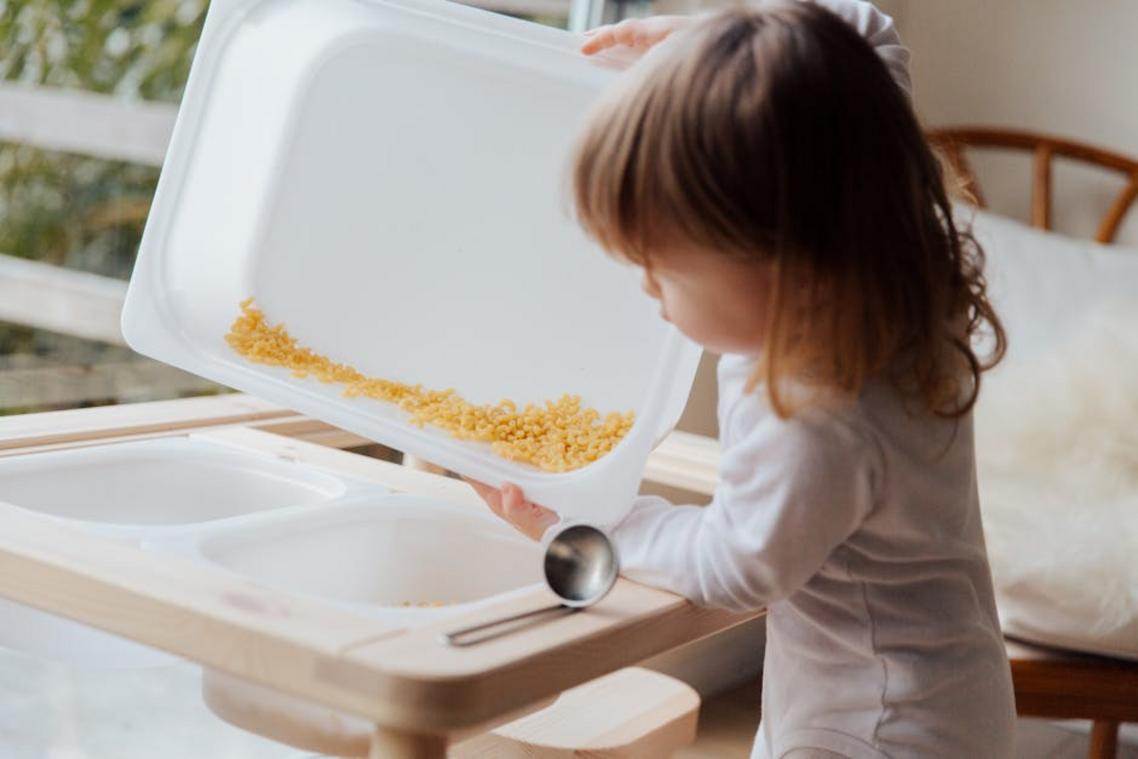
Children don’t magically learn to play on their own. Instead, they grow into it when we prepare the environment thoughtfully and then step back (yes, even when the living room looks like a toy tornado passed through). Here’s what I recommend at each stage to nurture independent play for kids in ways that actually stick.
Toddlers (Ages 1–3)
At this age, simplicity wins. Toddlers thrive on sensory-rich, hands-on exploration. Set up small “invitations to play,” which simply means arranging a few appealing items in a way that invites curiosity without overwhelming them. For example, place chunky wooden puzzles in a basket, set out large crayons with thick paper taped to the table, or offer stacking rings and soft blocks.
Additionally, try a transferring station: two bowls and a handful of pom-poms with a scoop. This builds fine motor skills (the small muscle movements in hands and fingers) while keeping them deeply focused. Rotate items every few days to keep interest fresh.
Preschoolers (Ages 3–5)
Now imagination takes center stage. Because symbolic play—using one object to represent another—blooms here, provide open-ended materials. A simple fort-building kit with sheets, couch cushions, and clips can become a castle, spaceship, or secret hideout. A dress-up box filled with scarves, hats, and old costumes invites storytelling.
Meanwhile, set out a tray with playdough and tools for sculpting, or create a bin with animal figurines and blocks to build habitats. You might be surprised how long they stay immersed when you resist directing the story. Do they really need you to explain how the tiger should live?
Early School-Aged Children (Ages 6–8)
As skills grow, so should the challenge. I suggest creating a small “maker space” stocked with recycled boxes, paper, tape, and markers for inventions. This encourages problem-solving and creative confidence. You can also provide more complex building sets with optional challenge cards for inspiration.
Alternatively, pair an audiobook with drawing supplies so they can sketch scenes as they listen. A simple nature journaling kit—clipboard, blank notebook, colored pencils—encourages observation and reflection. Pro tip: keep supplies visible and reachable; accessibility often determines whether an idea actually gets used.
Your Role: How to Be a Play Facilitator, Not a Play Director
Back in 2020, when many families suddenly spent all day at home, parents realized something: constant entertaining is exhausting (and unsustainable). The shift? Become a facilitator.
Start with a gentle 5–10 minute entry into your child’s world. Sit on the floor. Stack a few blocks. Make one silly dinosaur voice. Then slowly retreat—“I’ll be right here folding laundry.” This gradual handoff helps independent play for kids feel natural, not forced.
Observe, Don’t Intervene
- Resist correcting the “wrong” tower design.
- Let frustration happen (that’s problem-solving in disguise).
Mistakes build executive function—skills like planning and self-control (Harvard Center on the Developing Child).
Validate Effort, Not Outcome
Say, “I love how focused you were.” That reinforces persistence, a key driver of growth mindset (Dweck, 2006).
Schedule Quiet Time
Treat it like lunch or bedtime—predictable and calm. After two to three weeks of consistency, most kids begin initiating it themselves. (Pro tip: use a simple visual timer.)
Give Your Child the Gift of Confident, Independent Growth
You started this journey looking for real, practical ways to encourage independent play for kids—and now you have simple, doable strategies to make it happen. You understand why it matters, how it supports your child’s development, and how to create the right environment without constant supervision or guilt.
If you’re feeling stretched thin, constantly needed, and craving a few uninterrupted moments in your day, you’re not alone. The overwhelm is real—but so is the solution. When your child learns to play independently, they build creativity, confidence, and problem-solving skills. And you finally get the breathing room you deserve.
Now it’s time to put this into action. Start small today. Set up a simple play space, step back, and let your child explore. Stay consistent, even if it takes practice.
Thousands of moms trust our daily tips and proven routines to simplify family life and make parenting feel lighter—not harder. If you’re ready for calmer days and more confident kids, explore our practical guides and start transforming your daily rhythm now.