“Why is the sky blue?” “Why do dogs bark?” “Why can’t I stay up all night?” If you have a child in the “why” phase, you’ve likely fielded dozens of questions before breakfast. It can be exhausting—especially on busy days—but deep down, you know something important is happening. This constant curiosity isn’t random; it’s a powerful developmental milestone. In this article, we’ll explore the science of child curiosity and share simple, research-backed strategies to nurture it. Grounded in child psychology, these tips will help you transform endless questions into a lifelong love of learning.
The science behind an inquisitive mind starts with a simple truth: curiosity fuels development. From a developmental psychology perspective, curiosity is the engine of intellectual growth, pushing children to explore, test, and rethink the world around them. When a child asks “why,” the brain doesn’t just store facts; it builds connections.
In particular, repeated questioning stimulates the prefrontal cortex, the region responsible for decision-making, planning, and self-control. Over time, those mental workouts strengthen neural pathways—think of them as trails in a forest that become clearer the more they’re used. That’s the science of child curiosity in action.
Moreover, studies suggest that children who regularly engage in inquiry-based learning show stronger problem-solving skills and higher academic achievement later on, according to research published by the American Psychological Association. Critics sometimes argue that too many questions create distraction or defiance. However, I believe that guided curiosity—where adults respond with patience rather than shutdowns—builds resilience. After all, each thoughtful answer teaches a child that confusion is temporary, not threatening. Consequently, they grow into learners who persist through setbacks instead of avoiding them. In my view, nurturing curiosity isn’t indulgent; it’s essential preparation for adulthood’s complex problems. That preparation lasts a lifetime, truly.
Curiosity Through the Ages: A Developmental Roadmap
Curiosity doesn’t appear overnight. Instead, it unfolds in predictable stages, and understanding those stages helps you respond in ways that actually support growth.
Infants & Toddlers (0–3): Learning Through the Senses
At this stage, curiosity is physical. Babies explore by grabbing, shaking, dropping, tasting, and staring (yes, even at the ceiling fan). This sensory exploration builds neural connections at a rapid pace. According to the Center on the Developing Child at Harvard University, early experiences literally shape brain architecture.
So when your toddler throws food off the high chair, it’s less defiance and more experimentation with gravity. Offer safe textures, varied sounds, and supervised freedom to explore. Pro tip: rotate toys instead of buying more—novelty fuels engagement.
Preschoolers (3–5): The “Why?” Explosion
Next comes the endless questions. “Why is the sky blue?” “Why do dogs bark?” This phase is about cause-and-effect reasoning and building mental models of how the world works. In the science of child curiosity in the section once exactly as it is given, researchers note that repeated questioning strengthens reasoning pathways.
It can feel exhausting. However, short, simple answers work best. When you don’t know, say, “Let’s find out together.” (Google becomes your sidekick.)
School-Aged Children (6–10): From What to How
Now curiosity becomes more abstract. Children shift from “What is that?” to “How does that work?” and even “What if we tried this instead?” They may develop focused interests—dinosaurs, space, coding, soccer statistics.
Encourage projects, library visits, and open-ended conversations. After all, today’s cardboard-box inventor could be tomorrow’s engineer—or at least the kid who finally fixes the Wi-Fi.
5 Practical, Science-Backed Ways to Fuel Curiosity
Curiosity isn’t just a personality trait—it’s a skill. And like any skill, it grows with practice. The science of child curiosity shows that children ask more questions and explore longer when adults respond with encouragement rather than quick answers (Engel, 2011).
Here’s how to nurture it—with intention.
-
Model Curiosity (Answer vs. Ask Back)
A: “Because that’s how it works.”
B: “That’s a great question. What do you think?”
Option B builds critical thinking. When you pause before answering, you signal that their ideas matter. (Yes, even the dinosaur-in-the-toilet theories.) -
Create an Exploration Zone (Open-Ended vs. Single-Use Toys)
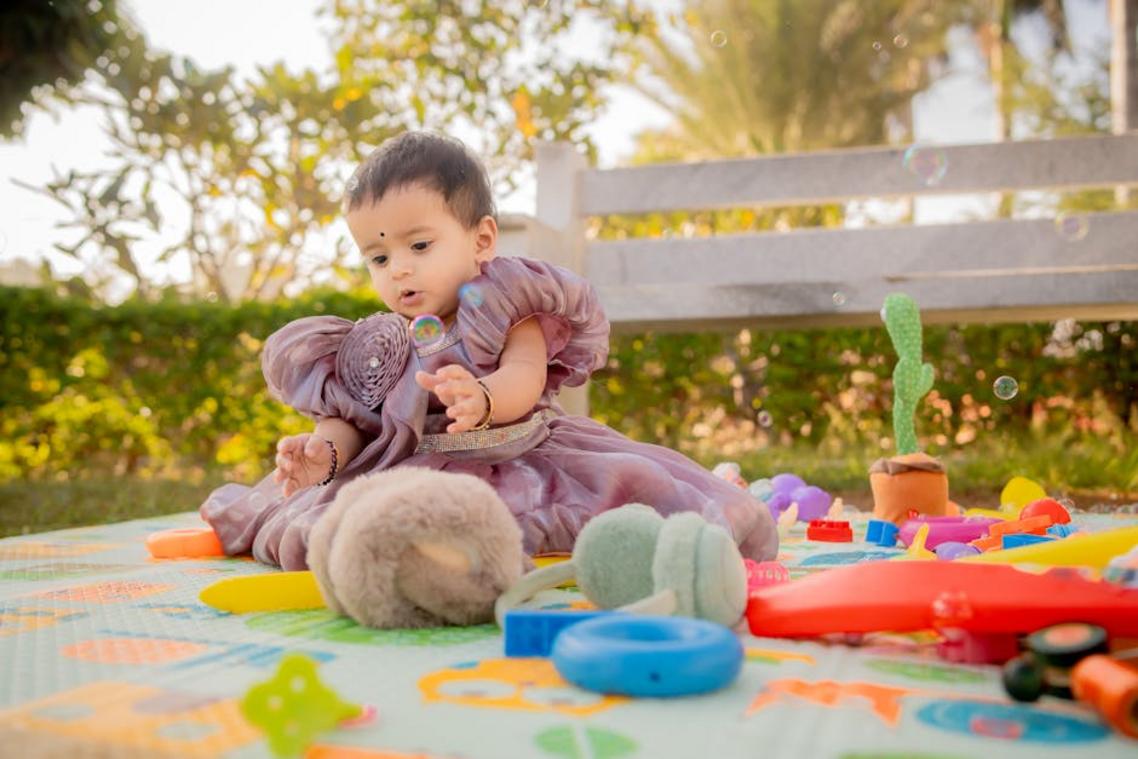
Blocks, clay, cardboard, art supplies—these are open-ended toys, meaning they can be used in multiple ways. Compare that to a button-pushing gadget that does one thing. Open-ended tools promote creative problem-solving and flexible thinking (Hirsh-Pasek et al., 2009).
Pro tip: Rotate materials monthly to keep interest fresh. -
Follow Their Lead (Dismiss vs. Dive Deeper)
If they’re obsessed with bugs, lean in. Visit the library. Take a nature walk. Curiosity compounds when interest is validated. -
Turn “I Don’t Know” into Discovery (Shut Down vs. Search Together)
Not knowing isn’t failure—it’s an invitation. Look it up together. Model how to evaluate sources. This connects directly to how parental mindset shapes child development outcomes. -
Encourage Safe Failure (Mistake vs. Data Collection)
Reframe errors as “data collection.” Scientists experiment. So can kids. (Even if the baking soda volcano overflows.)
Curiosity thrives where exploration feels safe.
Common Curiosity Killers to Avoid
Over-scheduling: When every minute is planned, kids lose the space for unstructured, child-led play. Boredom, however, often sparks creativity and problem-solving.
Dismissing questions: Phrases like “I’m too busy” or “That’s a silly question” quietly shut doors. Instead, pause and say, “What do you think?”
Providing instant answers: Although Google makes it tempting, instant solutions rob children of critical thinking.
Fear of mess: Likewise, constant tidiness limits sensory exploration—think less “Frozen” sparkle, more real-world mud.
The science of child curiosity shows hands-on discovery builds neural pathways. So, create small windows for wonder daily. Let them explore before you step in gently.
Raising a Lifelong Learner, One Question at a Time
Raising a curious child can feel overwhelming, especially on days when the questions never seem to stop. But nurturing curiosity isn’t reserved for experts or educators—it’s something any parent can do. The real challenge isn’t the endless “why” or “how.” It’s the pressure to have all the answers.
The truth is, you don’t need to know everything. The science of child curiosity shows that what truly matters is modeling the desire to explore and discover. When you shift from answering every question to exploring alongside them, you empower your child to become a confident, lifelong learner.
This week, try turning one “I don’t know” into a “Let’s find out together” and watch their world expand.