
If you’re searching for realistic, doable ways to create calmer days, smoother routines, and a more joyful home life, you’re in the right place. Modern motherhood comes with endless advice—but not all of it fits into real schedules, tight energy reserves, and the unpredictability of family life. This article cuts through the noise to deliver practical parenting tips, simple wellness routines, and sustainable mom life hacks you can actually use.
We focus on what works in real homes: small habit shifts, connection-first parenting strategies, and systems rooted in the psychology of motivation so changes stick long after the first burst of inspiration fades. Every recommendation is grounded in established behavioral research and widely accepted child development principles, ensuring guidance you can trust.
By the end, you’ll have clear, actionable steps to simplify your routines, support your family’s well-being, and feel more confident navigating everyday motherhood challenges.
Why does one child dive into homework while another melts down at the kitchen table? I’ve lived both scenes. One evening, my daughter proudly finished her math; the next, my son slid under his chair in protest (parenting keeps you humble). The difference often lies in the psychology of motivation—the study of why we act the way we do.
Start with an anecdote about a small win, then notice patterns:
- When kids feel capable, they try.
- When they feel controlled, they resist.
Is it laziness—or unmet needs?
Pro tip: Praise effort, not talent. That subtle shift builds resilient, self-driven kids.
The Two Main Types: Motivation from Within vs. The Lure of Rewards
Let’s start with a simple question: “Why are you doing that?”
When a child shrugs and says, “Because I like it,” you’re witnessing intrinsic motivation—the joy of doing something for its own sake. Think of a child lost in a book or building with blocks for hours. No gold star. No prize. The activity itself is the reward. In the psychology of motivation, this internal drive is linked to deeper learning and long-term persistence (Ryan & Deci, 2000).
On the other hand, extrinsic motivation comes from external rewards or consequences. “If I finish my homework, can I have screen time?” one child asks. Allowances, grades, praise, or avoiding punishment all fall into this category. And yes, they work—at least in the short term.
However, here’s the tension. Some experts argue rewards are necessary because “kids won’t do what they don’t want to do.” That’s fair. Life includes chores and deadlines. Yet research suggests that over-relying on rewards can reduce intrinsic interest over time (Deci, Koestner, & Ryan, 1999).
So what’s the balance? Notice what your child does without being asked. That’s your clue. Then say, “You love building—how can we turn cleanup into a construction challenge?” (Suddenly, it’s less of a battle.)
The Foundation of Drive: Meeting Core Needs First

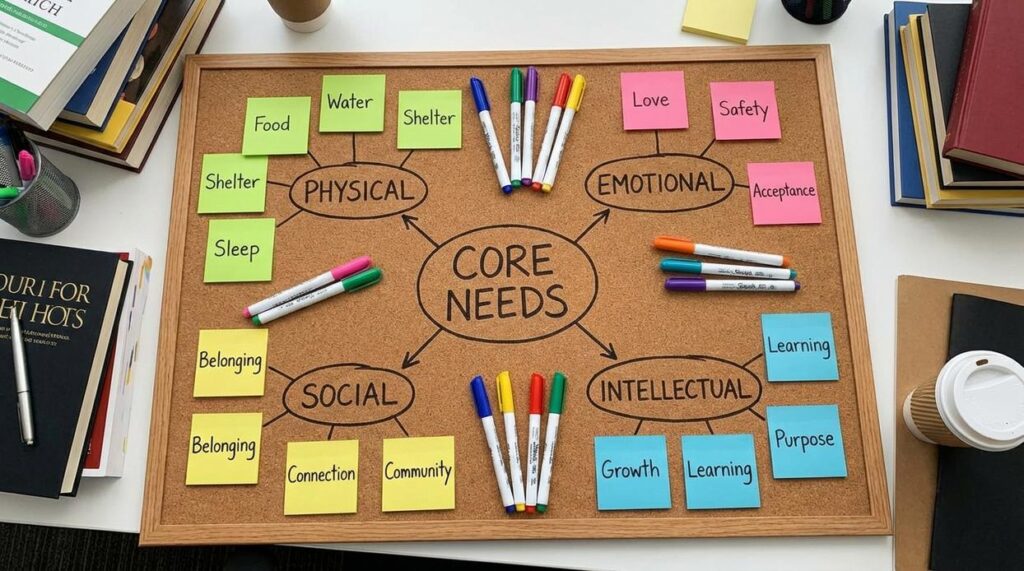
Maslow’s Hierarchy of Needs is a simple but powerful idea: before a child can aim high, their basic needs must be met. Think of it like building a pyramid—without a solid base, everything wobbles.
Here’s how the layers show up in real life:
| Layer | What It Means for Your Child | Quick Parent Check |
|---|---|---|
| Physiological | Food, sleep, movement |
Have they eaten and rested? |
| Safety | Security, predictability | Do they feel safe at home and school? |
| Love & Belonging | Connection, acceptance | Do they feel valued and included? |
A child who is hungry or exhausted isn’t “lazy.” Their brain is prioritizing survival. According to the psychology of motivation, unmet basic needs reduce cognitive capacity and focus (Maslow, 1943). In other words, tired brains don’t chase big goals.
Practical 3-Step Check-In Before Addressing Motivation:
- Fuel: Offer a snack and water.
- Rest: Adjust bedtime or allow quiet time.
- Reconnect: Spend 10 undistracted minutes together.
For example, if homework battles happen nightly, try moving homework after a snack and brief play break. Often, resistance drops quickly (it’s amazing what crackers and cuddles can fix).
Pro tip: Create a simple after-school routine that consistently meets these core needs first.
When the base is steady, confidence and curiosity naturally rise.
The Power of Choice: Autonomy, Competence, and Connection
Self-Determination Theory (SDT) is a research-backed framework explaining what truly drives human behavior. At its core, it argues that people thrive when three basic psychological needs are met: autonomy, competence, and relatedness. This isn’t just theory from a lab—it’s the psychology of motivation in action at your kitchen table.
Many parenting strategies rely on rewards or consequences. Critics argue that structure and discipline alone should be enough. And yes, boundaries matter. But without these three needs being met, compliance is usually short-lived (and often loud).
Autonomy: The Need for Control
Autonomy means feeling a sense of choice. It doesn’t mean letting kids run the house. It means offering meaningful options. Instead of “Clean your room now,” try, “Do you want to clean your room before or after your snack?” The task stays the same—but the ownership shifts.
Pro tip: Two choices work better than five. Too many options overwhelm rather than empower.
Competence: The Need to Feel Capable
Competence is the belief that “I can do this.” Break big tasks into smaller steps. “First, let’s put the books away. Next, the stuffed animals.” Each small win builds mastery. Think of it like leveling up in a video game—progress fuels effort.
- Celebrate progress, not perfection.
Relatedness: The Need to Connect
Relatedness is the desire to feel connected. “Let’s tackle this messy playroom together” transforms a chore into teamwork. Even routine-building benefits from connection, as explained in what neuroscience says about building better routines.
When kids feel choice, capability, and connection, cooperation stops being a battle—and starts becoming natural.
How Beliefs Shape Effort
A fixed mindset assumes abilities are static—“I’m just not a math person.” A growth mindset, by contrast, treats skill as trainable: “I can improve with practice.” That subtle shift changes everything.
In real life, this shows up at the homework table. One child shuts down after a mistake; another tries a new strategy. According to research by Carol Dweck (Stanford University), students praised for effort persist longer and choose harder tasks. That’s not hype—that’s psychology of motivation.
Still, some argue mindset talk ignores structural barriers. Fair point. Resources and support matter. Yet belief influences how children use the resources they have.
So, shift praise from person to process: “You kept testing strategies.” It builds resilience (think Rocky training montage, not instant champion). Pro tip: pair effort-praise with specific feedback for maximum impact. Over time, effort becomes identity, and identity fuels courageous action. Especially during tough seasons.
Bringing these ideas into daily family life doesn’t require a psychology degree; instead, it starts with small, intentional shifts. First, remember the core principle: build safety and security (Maslow), offer meaningful choices and celebrate competence (Self-Determination Theory), and praise effort over outcomes (Growth Mindset). Think of it as using psychology of motivation in the section once exactly as it is given to guide everyday moments. For example, start by offering two breakfast options instead of issuing commands; notice how choice boosts cooperation. Then, acknowledge persistence with specific praise, which builds confidence. This week, pick one strategy, observe shift, and adjust.
You came here looking for realistic ways to make motherhood feel lighter, more organized, and more fulfilling. Now you have practical routines, simple wellness shifts, and everyday mom hacks that actually fit into real family life.
The truth is, the hardest part of parenting isn’t knowing what to do — it’s finding the energy and consistency to keep going when you’re overwhelmed. That’s where understanding the psychology of motivation changes everything. Small wins build momentum. Simple systems reduce stress. And supportive guidance keeps you from burning out.
Don’t let exhaustion or decision fatigue run your home. Start with one routine from this guide today. Then layer in another tomorrow. Progress in motherhood isn’t about perfection — it’s about sustainable steps that protect your time and sanity.
Take the Next Step Toward Calmer, Happier Mom Life
If you’re tired of feeling behind, stretched thin, or unsure where to start, it’s time to plug into daily support designed for real moms. Get practical tips, proven family routines, and trusted guidance that thousands of moms rely on every day. Join now and start building a calmer, more confident motherhood — one doable step at a time.
 Founder & CEO
Gavren Thorvale has opinions about borode motherhood journeys. Informed ones, backed by real experience — but opinions nonetheless, and they doesn't try to disguise them as neutral observation. They thinks a lot of what gets written about Borode Motherhood Journeys, Curious Insights, Family Wellness Routines is either too cautious to be useful or too confident to be credible, and they's work tends to sit deliberately in the space between those two failure modes.
Reading Gavren's pieces, you get the sense of someone who has thought about this stuff seriously and arrived at actual conclusions — not just collected a range of perspectives and declined to pick one. That can be uncomfortable when they lands on something you disagree with. It's also why the writing is worth engaging with. Gavren isn't interested in telling people what they want to hear. They is interested in telling them what they actually thinks, with enough reasoning behind it that you can push back if you want to. That kind of intellectual honesty is rarer than it should be.
What Gavren is best at is the moment when a familiar topic reveals something unexpected — when the conventional wisdom turns out to be slightly off, or when a small shift in framing changes everything. They finds those moments consistently, which is why they's work tends to generate real discussion rather than just passive agreement.
Founder & CEO
Gavren Thorvale has opinions about borode motherhood journeys. Informed ones, backed by real experience — but opinions nonetheless, and they doesn't try to disguise them as neutral observation. They thinks a lot of what gets written about Borode Motherhood Journeys, Curious Insights, Family Wellness Routines is either too cautious to be useful or too confident to be credible, and they's work tends to sit deliberately in the space between those two failure modes.
Reading Gavren's pieces, you get the sense of someone who has thought about this stuff seriously and arrived at actual conclusions — not just collected a range of perspectives and declined to pick one. That can be uncomfortable when they lands on something you disagree with. It's also why the writing is worth engaging with. Gavren isn't interested in telling people what they want to hear. They is interested in telling them what they actually thinks, with enough reasoning behind it that you can push back if you want to. That kind of intellectual honesty is rarer than it should be.
What Gavren is best at is the moment when a familiar topic reveals something unexpected — when the conventional wisdom turns out to be slightly off, or when a small shift in framing changes everything. They finds those moments consistently, which is why they's work tends to generate real discussion rather than just passive agreement.