
Motherhood is beautiful—but it’s also busy, loud, and constantly changing. If you’re searching for a way to bring more structure, calm, and intention into your days, you’re in the right place. This article is designed to help you create a rhythm that supports both your family’s needs and your own well-being.
We’ll walk through a realistic, sustainable approach to building a daily planning system that actually works for moms—no perfection required. From organizing routines and simplifying meals to carving out moments for self-care, you’ll find practical strategies you can start using right away.
Our guidance is grounded in real-life parenting experiences, family wellness research, and tested home management strategies that busy moms rely on every day. Instead of overwhelming you with complicated frameworks, we focus on simple habits that create lasting impact.
By the end, you’ll have a clearer plan, smoother routines, and more breathing room in your daily life.
Your simple to-do list feels productive. Then it grows. And grows. Soon, you’re staring at an endless column of tasks that quietly hums with anxiety. This is the “Endless List” problem: a running inventory of everything undone, with zero context.
A standard list treats “email dentist” and “finish report” as equals. There’s no hierarchy, no filter for urgency versus impact. So you default to busywork because it’s faster. (We’ve all reorganized a drawer instead of making a hard call.)
Lists also ignore time and energy. A three-hour deep work task sits beside “start laundry.” Without reality-checking your capacity, FAILURE feels personal.
Then there’s the mental load: invisible planning, remembering, anticipating. School forms, grocery gaps, birthday gifts. They rarely make the list, yet drain you.
• PRIORITIES MATTER
• ENERGY ISN’T INFINITE
Lists will fade; daily planning system and morning habits that set the tone for a productive family day.
Finding Your Perfect Match: Digital vs. Analog Tools
Choosing between digital and analog tools isn’t about which is “better.” Rather, it’s about which features translate into real-life benefits for your routine.
To begin with, digital tools—such as planning apps, shared calendars, and task managers—offer automation. Notifications, cloud syncing, and cross-device access mean your grocery list updates in real time. That feature alone reduces mental load (and prevents the classic “I forgot the milk” moment). Many apps also include analytics, showing how you spend your time. According to a 2022 Microsoft Work Trend Index report, structured digital task management can improve productivity and reduce missed deadlines.
On the other hand, analog tools—paper planners, wall calendars, sticky notes—provide tactile engagement. Writing by hand activates deeper cognitive processing, improving memory retention (Mueller & Oppenheimer, 2014). In practical terms, physically mapping out your week can make commitments feel more concrete. There’s also zero risk of battery failure—no charger required.
Here’s a side-by-side breakdown:
| Feature | Digital Tools | Analog Tools | Benefit |
|———-|—————|————–|———-|
| Accessibility | Sync across devices | Physical only | Flexibility vs. focus |
| Reminders | Automated alerts | Manual review | Fewer missed tasks vs. intentional review |
| Customization | Templates, integrations | Stickers, layouts | Speed vs. creativity |
| Distraction Risk | High (notifications) | Low | Convenience vs. calm |
However, some argue digital tools create dependency and distraction. That’s fair—constant notifications can fracture attention. Conversely, critics of analog systems say they’re inefficient and hard to scale. Yet efficiency isn’t everything; sometimes clarity beats speed (think Hermione’s time-turner, but for your to-do list).
Ultimately, many people blend both. For example, a shared family calendar online paired with a paper-based daily planning system offers visibility and reflection.
Pro tip: Test one method exclusively for two weeks before mixing systems. Consistency reveals what truly supports your workflow.
In the end, the perfect match is the one you’ll actually use.
Beyond the Tool: Frameworks That Create Real Structure
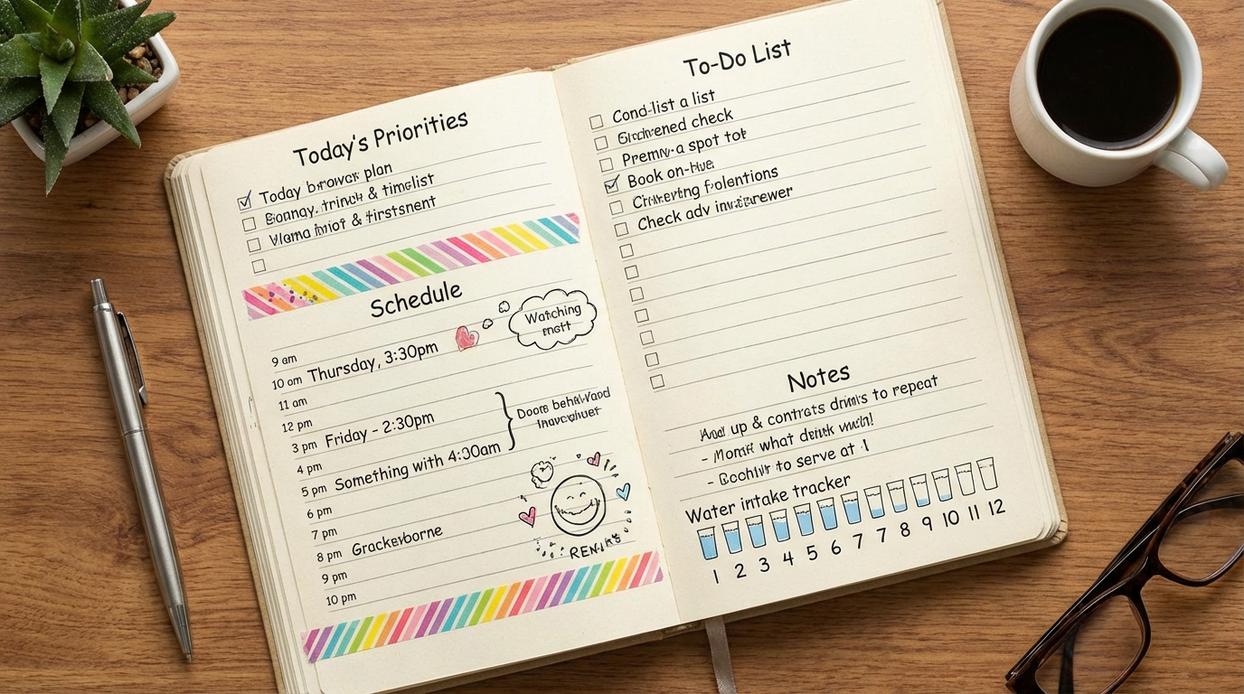
For a long time, I thought productivity was about finding the perfect app. Spoiler: it wasn’t. What I actually needed was a framework—a repeatable structure that didn’t collapse the moment life got loud (which, let’s be honest, it always does).
First, there’s Time Blocking, the method of assigning every part of your day to a specific task or “block” of time. In theory, it’s airtight. In practice, I once scheduled my day so tightly that a single unexpected phone call derailed everything. The lesson? Build buffer time. Structure works best when it breathes.
Then comes Task Batching, or grouping similar tasks together to reduce context switching (the mental cost of jumping between unrelated activities). I used to answer emails all day long—five minutes here, ten minutes there. As a result, nothing substantial got done. Batching communication into two windows a day instantly improved focus.
Of course, there’s the “Eat That Frog” Principle—tackle your hardest, most important task first. I avoided this for weeks, choosing “quick wins” instead. Unfortunately, the big task only grew teeth. Once I started handling it first thing, my entire day felt lighter.
Finally, the 1-3-5 Rule: plan 1 big task, 3 medium tasks, and 5 small ones. Initially, I overloaded the categories (turns out, not everything is a “big” task). But refining it transformed my daily planning system into something realistic and sustainable.
Tools organize. Frameworks teach. And mistakes? They refine the structure.
Start with a 20-minute Weekly Review every Sunday. In that short window, map appointments, confirm school events, and plan dinners; this simple reset slashes decision fatigue throughout the week. Next, create a central Command Center—a shared digital calendar or a kitchen whiteboard—so everyone sees commitments at a glance. Then, buffer your time by adding 15 to 20 minutes before and after appointments to absorb traffic and toddler meltdowns (they happen). Could a daily planning system really change your mornings? Pro tip: color-code activities for instant clarity. Consistency turns chaos into calm and frees mental space for connection and joy daily.
Create Calmer, More Confident Days at Home
You came here looking for a way to make motherhood feel more manageable—and now you have it. By simplifying routines, setting realistic expectations, and using a daily planning system, you can turn overwhelming days into ones that feel steady and intentional.
The stress, the constant mental load, the feeling of never quite catching up—that’s the real pain point. And it doesn’t disappear on its own. It changes when you put supportive systems in place that work for your family instead of against you.
Start small. Choose one routine to tighten up this week. Write it down. Follow it for a few days. Then build from there. Consistency beats perfection every time.
If you’re tired of chaotic mornings, forgotten tasks, and ending the day exhausted and behind, now is the moment to reset. Join thousands of moms who rely on our trusted, top-rated parenting resources for practical guidance that actually works. Explore more tips, download a simple routine template, and take back control of your days—starting today.