If you’ve ever looked around your home and felt instantly overwhelmed by the clutter, the half-finished tasks, and the constant mental checklist running in your head—you’re not alone. The chaos isn’t just physical; it’s emotional. But the goal isn’t a picture-perfect, show-home-ready space. What most families truly need is a functional, stress-free environment that makes daily life easier and frees up more time for what matters most. This guide is built on real-life experience managing the beautiful mess of family life, and it will walk you through simple, sustainable home organization systems that actually work for busy households—not just for a weekend reset.
The Foundation: Declutter Without the Drama
Big weekend purge (exhausting, tear-filled, everyone overwhelmed) vs. 15 calm minutes a day (steady, doable, almost boring). The winner? The boring one.
The “15-Minute Sweep”
The 15-Minute Sweep means choosing one tiny zone—a single drawer, one countertop, one shelf—and setting a timer. Fifteen minutes. That’s it. When the timer ends, you stop. No spirals, no pulling everything out of every closet like you’re in a makeover montage.
Why it works: small wins build momentum. According to behavioral science research on habit formation, consistency beats intensity for long-term results (Clear, 2018). In other words, slow and steady actually sticks.
Small space. Short time. Zero drama.
The “One In, One Out” Rule
Option A: New toy comes in, nothing leaves (hello, overflowing bins).
Option B: For every new item, one item exits.
The “One In, One Out” Rule is non-negotiable. New sneakers? Old pair donated. New stuffed animal? One passes on to another child. It’s simple math—and surprisingly powerful (pro tip: decide what leaves before the new item enters).
The Four-Box Method for Families
Using home organization systems like the Four-Box Method makes decisions clearer: Keep, Donate/Sell, Trash, Relocate. Kids choose where their items go, learning ownership and generosity along the way. Yes, they may try to “relocate” everything (nice try). But guided choices build lifelong habits.
Creating Zones for a Simpler Family Flow
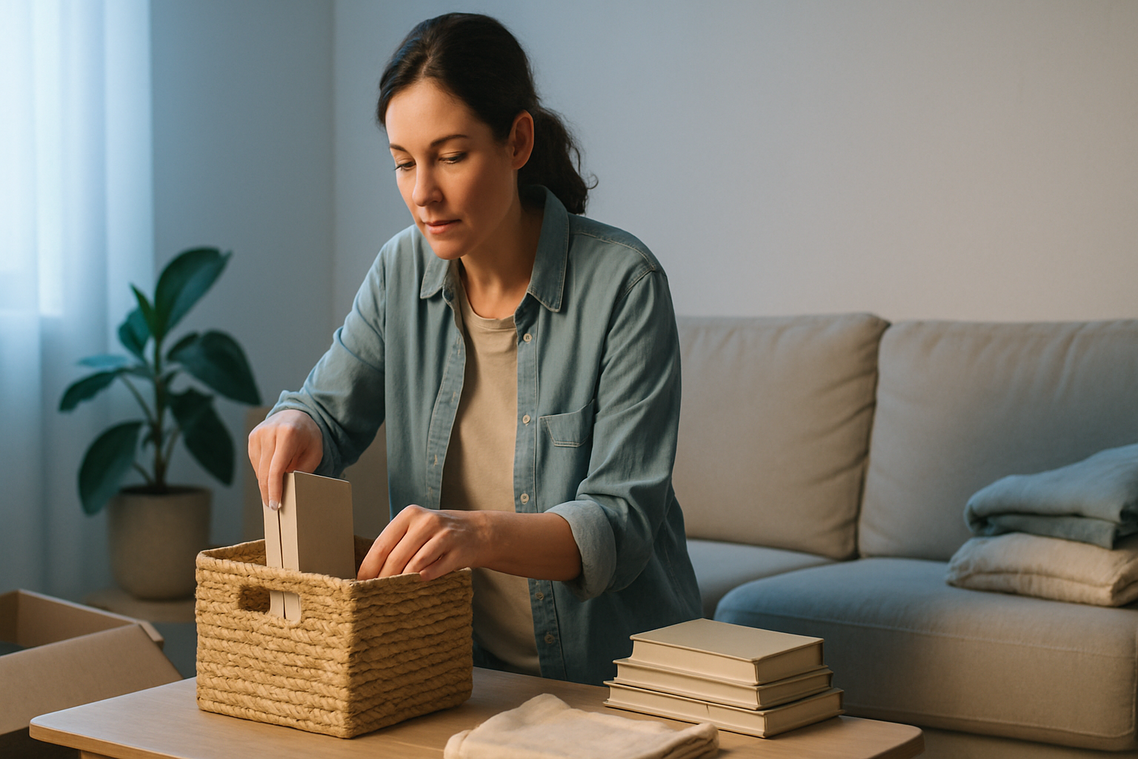
If your mornings feel like a scavenger hunt for keys, backpacks, and permission slips, you’re not alone. The solution isn’t “try harder.” It’s creating intentional zones.
The Command Center
First, establish a Command Center—a central hub where daily essentials live. Think wall-mounted mail slots, labeled folders for school papers, hooks for keys, and a large monthly calendar. By defining one drop zone, you eliminate countertop creep (you know, the slow takeover of every flat surface). Some argue digital calendars make physical hubs unnecessary. However, visual cues in shared spaces reduce decision fatigue and missed tasks, especially for kids. A dry-erase board for weekly priorities adds flexibility without paper clutter.
Kid-Friendly Stations
Next, design stations at your child’s height. Low bins labeled with words or pictures build independence because children can see—and return—what they use. A homework caddy stocked with pencils, erasers, and chargers keeps everything within reach. While critics say kids won’t maintain systems anyway, research shows children thrive with predictable environments (American Academy of Pediatrics). In other words, structure supports responsibility. (Yes, even if it doesn’t look Pinterest-perfect.)
High-Traffic Hotspots
Finally, tackle problem areas with practical features. In the entryway, install sturdy hooks spaced 12 inches apart and add ventilated shoe cubbies to prevent odor buildup. In the pantry, group like items—grains, snacks, baking goods—and store them in clear, airtight containers for freshness and visibility. This complements broader home organization systems while making meal prep faster. For example, organizing snacks simplifies planning using budget friendly meal prep ideas for large families.
Ultimately, defined zones reduce chaos because everything has a home—and everyone knows where it is.
Smart Storage Hacks for Everyday Life
Back in 2020, when many families suddenly found themselves home all day, clutter piled up fast. After three months of reorganizing trial and error in my own space, one truth became obvious: if you don’t use your walls, you’re wasting prime real estate.
Go Vertical
First, look up. Floating shelves, tall bookcases, and over-the-door organizers instantly expand storage without stealing floor space. Vertical storage means using wall height instead of square footage (especially helpful in apartments where every inch counts). Some argue that wall shelving makes rooms feel crowded. Fair point. But when styled with intention—think matching bins or balanced spacing—it actually creates visual order, not chaos.
The Power of Clear Bins
Next, clear, stackable containers with labels are game changers. Clear bins reduce “out of sight, out of mind” syndrome (we’ve all rebought ketchup thinking we were out). Labeling adds accountability and saves time during busy weekday mornings. Pro tip: review bins every six months to prevent mystery clutter from creeping back in.
Think Outside the Box
Finally, rethink everyday items. A hanging shoe organizer can hold cleaning supplies or snack packs. Magazine files neatly store water bottles or cutting boards. These small pivots turn random spaces into practical home organization systems that evolve with your life.
Making It Stick: Building Lasting Organizational Habits
Creating routines sounds complicated, but it really means repeating small actions until they feel automatic. Think of habits as behaviors you no longer debate—you just do them.
Start with the Evening Reset. This is a simple 10-minute tidy-up before bed focused only on main living areas. Set a timer, put items back where they belong, and clear surfaces. The goal isn’t perfection; it’s preparing tomorrow’s starting point. (Future-you will be grateful.)
Next, schedule a Weekly System Check. A “system” just means the way you’ve decided something works—like where shoes go or how papers are sorted. Once a week, quickly ask: Is this working? If not, adjust. Good home organization systems evolve as kids grow and schedules change.
Finally, make it a team effort. Assign age-appropriate tasks—toddlers sort toys, older kids manage laundry. When everyone participates, responsibility feels shared, not forced.
Your Organized Space is a Happier Place
An efficient household isn’t a dream reserved for someone else—it’s completely within your reach. With small, consistent actions, you can create rhythms that make daily life smoother and far less overwhelming.
When clutter piles up and routines fall apart, household chaos steals precious time and energy you could be spending with the people you love. That constant stress adds up.
The good news? You don’t need perfection. You just need simple, sustainable home organization systems that work for your real life.
Start today. Choose one strategy from this article and put it into action. One small win can change the entire feel of your home.