
Choosing the right planning system can feel overwhelming, especially when you’re juggling parenting responsibilities, family schedules, and personal goals. If you’re searching for clarity on the digital vs paper planner comparison, you likely want a straightforward breakdown that helps you decide what truly works for your lifestyle—not just what’s trending online.
This article explores the real-life benefits and drawbacks of both options, from flexibility and accessibility to focus and long-term organization. We’ll look at how each system supports busy family routines, daily task management, and mental clarity, so you can make a confident, informed choice.
Our insights are grounded in current productivity research, feedback from parents managing full household schedules, and proven time-management strategies. By the end, you’ll understand which planning method aligns best with your habits, responsibilities, and goals—so you can stay organized without adding more stress to your day.
Finding Your Family’s Command Center: Digital vs. Paper Planners
If you’ve ever lain awake replaying tomorrow’s drop-offs, dentist appointments, and that spirit-day costume you forgot (again), you know the mental load is real. Managing a family often feels like running air traffic control without radar.
This guide offers a practical digital vs paper planner comparison to help you choose what actually works.
Digital planners
- Sync across devices
- Send reminders
- Easy to share
- Tangible and distraction-free
- Easier for visual thinkers
- Satisfying to check off
The right system reduces stress, saves time, and fits your real life—not your fantasy Pinterest routine.
The Case for Digital: Your Life, Synced and On-the-Go
If you’ve ever double-booked a dentist appointment and soccer practice, you already know the stress of scattered schedules. A digital planner puts everything in one searchable, shareable place—so your life moves with you, not against you.
Accessibility & Syncing means your calendar updates in real time across devices. With shared family calendars like Google Calendar, you and your partner can coordinate work shifts, pediatrician visits, and birthday parties without the “I thought you had it” debate. Whether you’re at the office or in the pickup line, your schedule is right there.
Automated reminders are sanity savers. Notifications for bill payments, school events, and appointments reduce mental load (and those 2 a.m. “Did I forget something?” moments). What’s in it for you? Fewer late fees, fewer missed meetings, and more breathing room.
Integration turns planning into a seamless system:
- Sync grocery lists with meal plans
- Connect to-do lists to calendar deadlines
- Link school apps for instant updates
In any digital vs paper planner comparison, the advantage is clear: automation and connectivity.
Potential downsides? There’s a learning curve, digital distractions, and battery dependence. Still, the payoff—clarity, coordination, and calm—makes going digital a smart upgrade.
The Power of Paper: Mindful Planning in a Tangible World
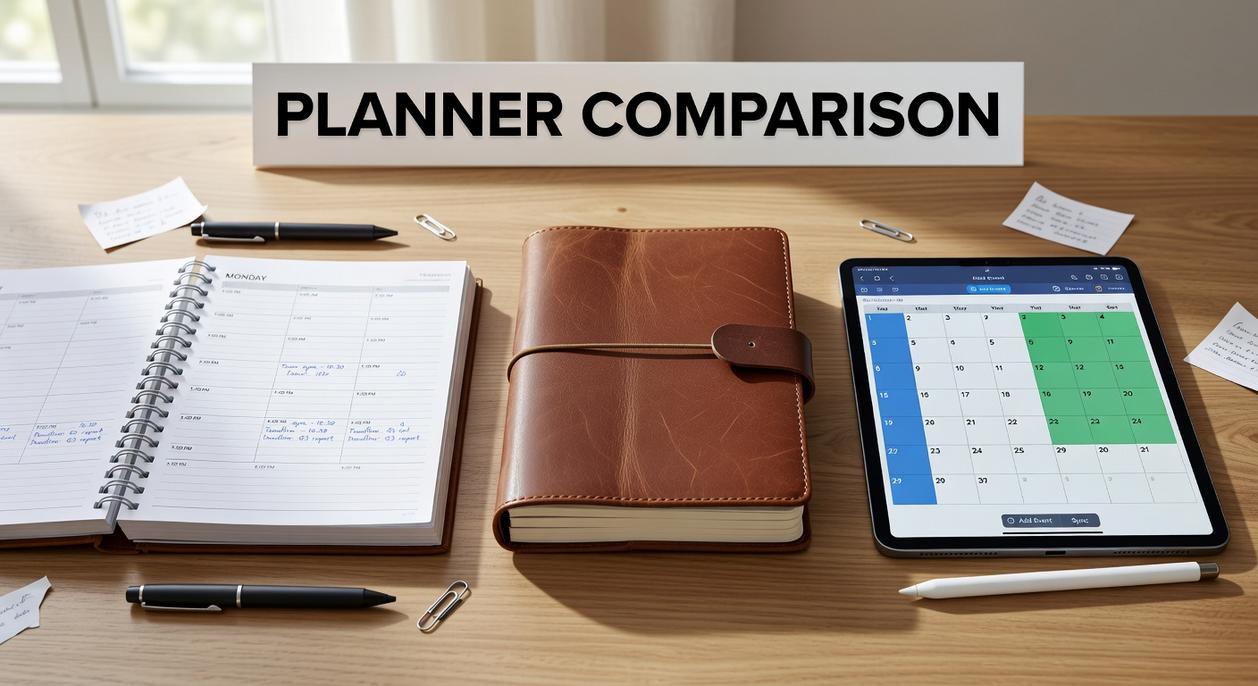
In a world ruled by notifications, paper planning feels almost rebellious. And that’s exactly the point.
The Tactile Experience & Memory
Writing by hand activates deeper cognitive processing—a phenomenon researchers call the generation effect, where creating information yourself improves recall (Psychological Science, 2014). For moms juggling schedules and snack requests, this matters. Physically writing tasks strengthens memory pathways and sharpens focus (think of it as a brain workout without the leggings). When “mom brain” strikes, ink on paper becomes a reliable external memory bank.
A Screen-Free Sanctuary
A planner creates DISTRACTION-FREE SPACE. No pop-ups. No doom-scrolling. Just clarity. Unlike apps competing for attention, paper invites calm intention—especially when paired with practices like evening reflection rituals to close your day with clarity. The benefit? More presence, less overwhelm.
Infinite Customization
Stickers, color-coding, habit trackers—your system, your rules. Creative personalization boosts motivation through visual cues and positive reinforcement (Journal of Consumer Research, 2012).
| Feature | Paper Planner | Digital Planner |
|---|---|---|
| Focus | No alerts |
Notification risk |
| Memory Boost | Strong (handwriting effect) | Moderate |
| Backup | Manual copies | Cloud sync |
In any digital vs paper planner comparison, paper wins on mindfulness and memory. Downsides? No automatic reminders, physical storage needs, and limited sharing. Still, the payoff is CONTROL, CLARITY, and calm.
Head-to-Head Showdown: Which Planner Wins for Your Family?
Choosing a planner isn’t just about aesthetics. It’s about how your family actually lives.
Portability & Convenience
A paper notebook feels tangible and dependable (no dead battery at pickup line). But it’s one more thing to carry. Your phone? It’s already glued to your hand. Pulling up an app takes seconds, whether you’re in the grocery aisle or the school parking lot.
Still, some parents argue that phones invite distraction. You open your calendar and suddenly you’re scrolling. Fair point. But with app limits and focused modes, digital tools can reduce that temptation.
Family Collaboration
Here’s where things get interesting. Sharing a single physical planner means passing it around the kitchen like a talking stick. Miss the memo? Chaos.
A shared digital calendar updates in real time. Everyone sees soccer practice added instantly.
This is the heart of any digital vs paper planner comparison: collaboration. If your household runs like a group project, digital wins on logistics alone.
Cost & Long-Term Investment
A quality planner can cost $20–$50 annually. Apps range from free to subscription-based (typically $5–$15 per month, depending on features).
• Paper = one-time yearly purchase
• Digital = potentially recurring fees
Over five years, subscriptions may cost more. But if they prevent missed appointments or double bookings, that investment may pay for itself.
Flexibility & Adaptability
Spilled ink or crossed-out mistakes can clutter a page fast. Digital entries? Edit, drag, delete. Done.
Life changes quickly—sick days, rescheduled meetings, surprise recitals. Digital systems adapt instantly. Paper requires white-out and patience.
Pro tip: If you love writing but need flexibility, use erasable pens or pair paper planning with a digital master calendar.
Wellness & Mental Clarity
Screens exhaust us. Studies link excessive screen time with increased stress and sleep disruption (American Psychological Association).
Writing by hand can feel grounding, even meditative. But digital reminders reduce mental load—no more trying to remember everything.
So what’s next? Ask yourself:
• Do we need shared access?
• Do I crave screen breaks?
• Are we growing into a busier season?
Your answer might not be either/or. Many families blend both—and that hybrid approach might be your real winner.
The Hybrid Hack changed my mornings. Last year, I missed a pediatrician appointment because my paper planner stayed home on the counter (classic chaos). That was my wake-up call. Now I use a digital calendar for shared appointments and time-sensitive reminders—the HARD landscape.
• Automatic alerts keep everyone aligned.
• Color-coding avoids double-booking.
Then I open my physical planner for daily to-do lists, goal tracking, journaling, and meal planning—the soft landscape. The digital vs paper planner comparison misses this: together, they create a CALM, customized system that balances reliability with mindfulness. Pro tip: sync weekly every Sunday night. Trust me.
The goal was simple: find a system to manage family life effectively. Yet the real challenge is juggling shareable, on-the-go scheduling with focused, personal planning. After three months of testing different setups last year, one truth stood out: the best system fits your personality and your family’s rhythm. Some thrive with digital vs paper planner comparison, others need a hybrid approach. What matters most is consistency. Can you commit for 30 days? Choose one system, try it, and adjust if it doesn’t click. Your time deserves a tool you’ll actually use. Small tweaks make big differences over time. That’s normal.
Create a Planning System That Finally Works for You
You came here trying to decide which planning method actually fits your busy mom life — and now you have clarity. By walking through the digital vs paper planner comparison, you can clearly see how each option supports different routines, personalities, and seasons of motherhood.
If you’ve been feeling scattered, overwhelmed, or constantly behind, the real issue isn’t you — it’s using a system that doesn’t match your daily reality. The right planner should reduce stress, not add to it. It should simplify your routines, keep your family organized, and give you breathing room in your day.
Now it’s time to choose one method and commit to it for the next 30 days. Set it up, keep it visible, and make it part of your daily rhythm. Consistency is what turns planning into peace of mind.
If you want more practical mom-tested routines, simple organization tips, and realistic systems that actually work, explore our daily guides and family planning resources. Thousands of moms rely on our trusted advice to simplify their schedules and reclaim their time — and you can too. Start today and build a routine that supports you, not stresses you.
 Community Engagement Manager
Sparklevana Jones is the kind of writer who genuinely cannot publish something without checking it twice. Maybe three times. They came to borode motherhood journeys through years of hands-on work rather than theory, which means the things they writes about — Borode Motherhood Journeys, among other areas — are things they has actually tested, questioned, and revised opinions on more than once.
That shows in the work. Sparklevana's pieces tend to go a level deeper than most. Not in a way that becomes unreadable, but in a way that makes you realize you'd been missing something important. They has a habit of finding the detail that everybody else glosses over and making it the center of the story — which sounds simple, but takes a rare combination of curiosity and patience to pull off consistently. The writing never feels rushed. It feels like someone who sat with the subject long enough to actually understand it.
Outside of specific topics, what Sparklevana cares about most is whether the reader walks away with something useful. Not impressed. Not entertained. Useful. That's a harder bar to clear than it sounds, and they clears it more often than not — which is why readers tend to remember Sparklevana's articles long after they've forgotten the headline.
Community Engagement Manager
Sparklevana Jones is the kind of writer who genuinely cannot publish something without checking it twice. Maybe three times. They came to borode motherhood journeys through years of hands-on work rather than theory, which means the things they writes about — Borode Motherhood Journeys, among other areas — are things they has actually tested, questioned, and revised opinions on more than once.
That shows in the work. Sparklevana's pieces tend to go a level deeper than most. Not in a way that becomes unreadable, but in a way that makes you realize you'd been missing something important. They has a habit of finding the detail that everybody else glosses over and making it the center of the story — which sounds simple, but takes a rare combination of curiosity and patience to pull off consistently. The writing never feels rushed. It feels like someone who sat with the subject long enough to actually understand it.
Outside of specific topics, what Sparklevana cares about most is whether the reader walks away with something useful. Not impressed. Not entertained. Useful. That's a harder bar to clear than it sounds, and they clears it more often than not — which is why readers tend to remember Sparklevana's articles long after they've forgotten the headline.